Myths series
AI is inherently discriminatory — true or false?
Myths series · Article 4/10
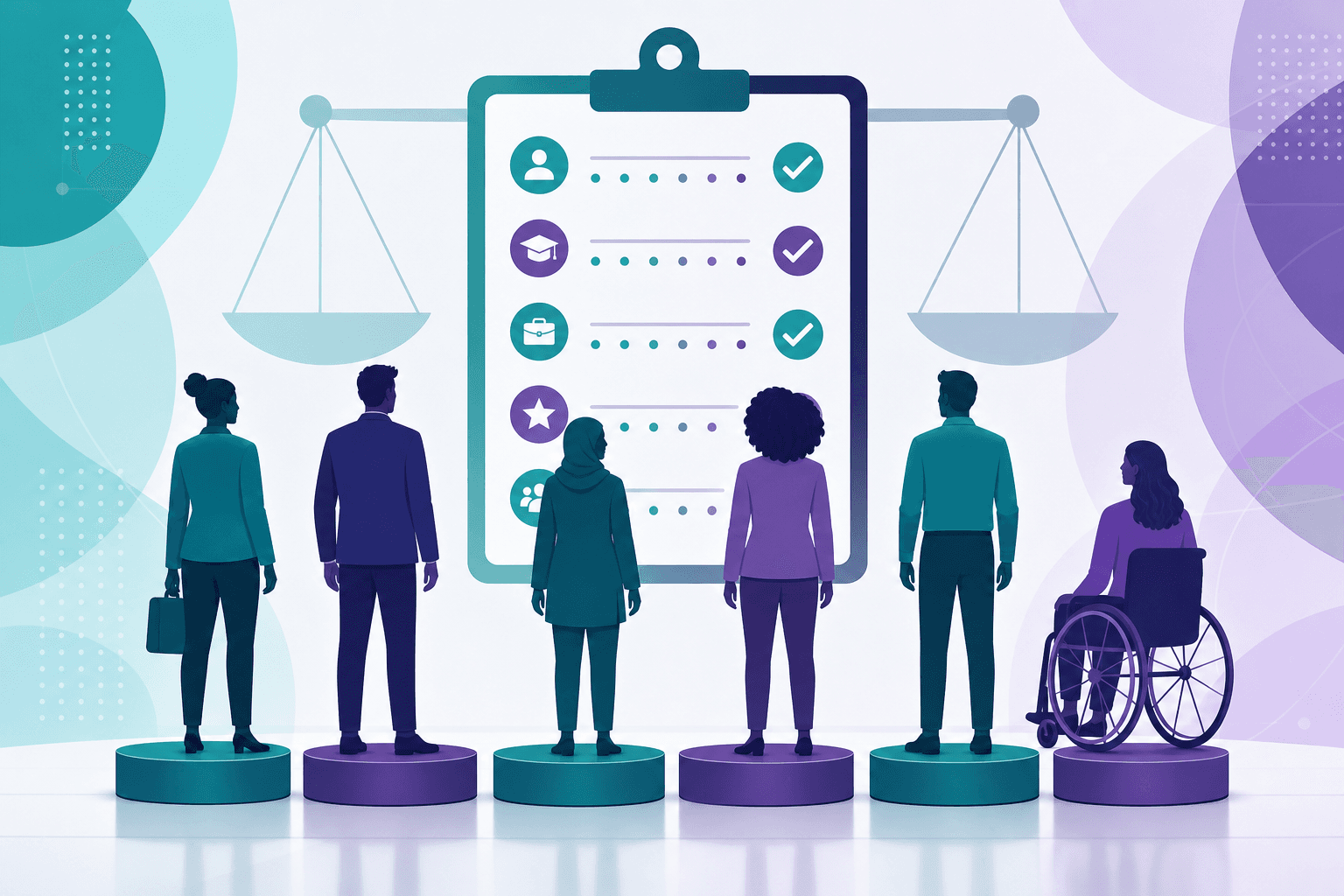
Algorithmic bias scandals — including Amazon penalizing CVs containing the word women's — cemented the idea that hiring AI always discriminates. The risk is real and documented, but not a technological fate: it is a design, data, and governance choice.
Unstructured human interviews discriminate too, often unconsciously: halo effects, similarity bias, different questions by profile. Well-governed AI can enforce the same grid for everyone and produce an audit trail impossible after an informal coffee chat.
The right executive question is not AI or no AI, but whether you have explicit criteria, ban proxy variables, and audit outcomes.
What people say
« AI is inherently discriminatory. »
In practice
AI amplifies bias you allow through — structured protocols, banned proxy variables, and regular audits can reduce discrimination rather than worsen it.
The risk is real — Amazon and beyond
In 2018, Amazon scrapped a CV screening tool trained on a decade of historical applications: the model learned to penalize wording associated with female applicants. It was not programmed to discriminate — it learned past bias.
Other documented cases involve geographic or school proxies correlated with origin or gender. Employers remain legally liable whether decisions are human or algorithmic.
The lesson: opaque scoring on biased historical data is more dangerous than structured interviews on explicit job criteria.
Proxy variables to ban explicitly
Beyond obvious sensitive attributes (gender, age, origin), indirect signals contaminate poorly designed models or scorecards.
- Zip code, neighborhood, or city name (socio-economic or ethnic proxy).
- School or university as automatic filter beyond job relevance.
- Employment gaps penalized mechanically (disproportionate impact on women and caregivers).
- Photo, voice, or speech pace as score inputs.
- Native language or accent when the role does not require it.
- Inferred mobility history or marital status.
The four-fifths rule
From U.S. EEOC practice, the four-fifths rule is a screening test: if a protected group's selection rate falls below 80% of the highest group's rate, disparate impact is suspected.
Apply it per funnel stage (pre-screen pass → manager interview → offer) and per application source. A gap at an AI stage signals criteria or calibration issues — not inevitability.
Document analyses even in Europe: they show proactive diligence to regulators and in disputes.
What structured interview research shows
Meta-analyses (Schmidt & Hunter and later work) show structured interviews — same questions, predefined scorecards — predict performance better and reduce bias versus unstructured conversations.
Pre-screening AI that applies this structure to 100% of candidates standardizes what many HR teams fail to enforce manually under deadline pressure.
Structure alone is not enough: criteria must measure job-related competence, not vague culture fit proxies.
Annual audit checklist
Schedule this audit as you would pay equity review — with HR, your DPO, and optionally an external expert.
- Pass rates by gender, age band, and source at each stage.
- Scoring criteria review: each justified by a job requirement.
- Testing on a diverse anonymized CV or response panel.
- Confirm the vendor uses no emotion inference or biometrics.
- Traceability: does every rejection have documented human review?
- Action plan if a >20% gap appears (recalibration, criterion removal, training).
HiLucy criteria-based scoring in practice
HiLucy assesses transcribed answers against recruiter-defined criteria set before the interview — technical skills, sector experience, availability, factual motivation — not proxy signals.
Each summary is readable by recruiters with source excerpts; scores can be challenged or manually overridden. That traceability is the foundation of credible fairness audits.
Demand the same transparency from any vendor: no unexplained single score out of 100.
Key takeaway
AI does not discriminate by default — bad criteria and missing audits do; structured, explicit, annually reviewed processes are your best defense.
Frequently asked questions
Is AI necessarily discriminatory in hiring?
No. Risk comes from data and design, not technology itself. Structured protocols, explicit criteria, and audits reduce bias — sometimes better than unstructured interviews.
Want to move from reading to action? See how Hi Lucy automates your voice AI interviews and your approach to interviews powered by artificial intelligence.